When Nzanzu Muhumbania Antoine graduated with a Bachelor’s degree in Software Engineering from the African University of Rwanda (AUCA) in November 2025, he had the knowledge, but like many young graduates, he faced a bigger question: How do I turn what I learned in class into something that creates real impact?
A few months later, an opportunity came that would change the direction of his career.
In December 2025, Antoine joined SOLVIT AFRICA’s Code2Connect Fellowship, a three-month programme designed to bridge the gap between academic learning and practical technology skills. What started as a search for experience became a journey that transformed him from a graduate looking for his first opportunity into a developer, trainer, and someone helping others build their own futures in technology.
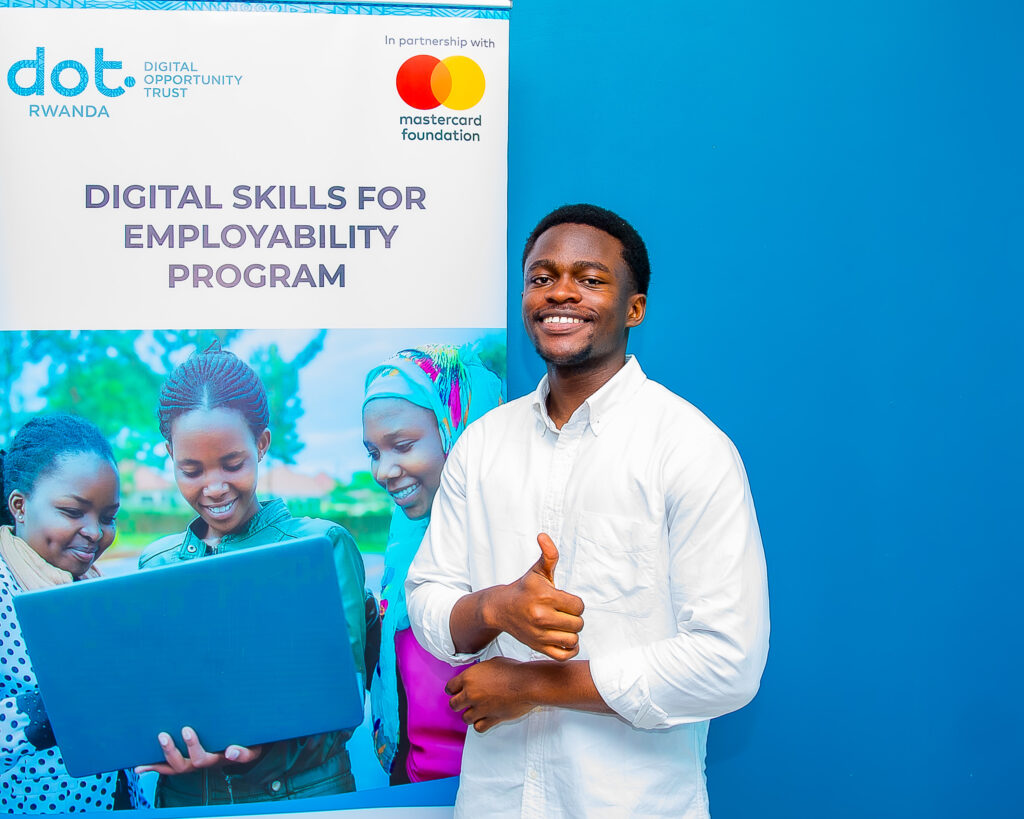
Code2Connect Fellowship is a hands-on digital training program implemented by SOLVIT AFRICA under the Digital Skills for Employability (DSE) Program. Led by Digital Opportunity Trust (DOT) Rwanda in partnership with the Mastercard Foundation, it equips African youth with practical tech skills, mentorship, and career paths.
Before joining the fellowship, Antoine described himself as a young graduate looking for a platform where he could showcase his skills, learn from experienced professionals, and begin his career in software engineering.
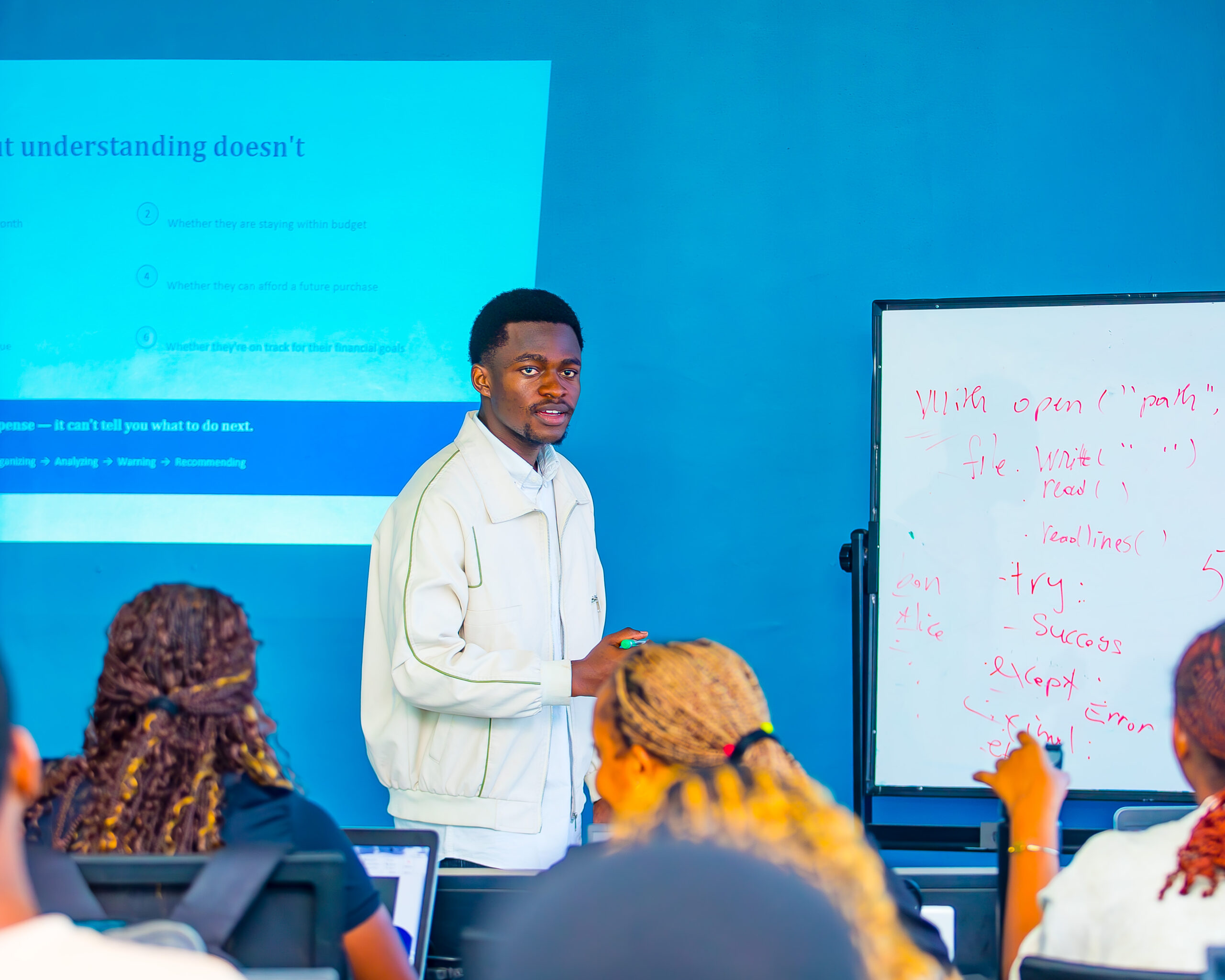
Today, he works with SOLVIT AFRICA as a react and web development facilitator, helping train aspiring developers and sharing the knowledge he gained through the same programme that opened doors for him.
The Code2Connect Fellowship is a three-month, in-person training programme implemented by SOLVIT AFRICA under the Digital Skills for Employability (DSE) Program. It was created to equip young people who are not in education, employment, or training with practical digital skills and support to thrive in today’s technology ecosystem.
For Antoine, the biggest difference between university and the fellowship was not the knowledge itself, but the opportunity to apply it.
“At university, I gained knowledge and learned concepts about how things work. But the programme opened opportunities for me to actually practice those skills and work on things that can be used and judged by people in real life,” he said.
The fellowship exposed him to modern web development, real projects, teamwork, and the professional environment required to succeed beyond the classroom.
It also changed the way he viewed his own abilities.
Before joining Code2Connect, Antoine says he had skills that were not formally recognised. After completing the programme, he gained skills that were acknowledged, applied, and shared with others — giving him greater confidence as he pursued new opportunities.
Becoming the person who opens doors for others
For many people, success means reaching their own goals. For Antoine, success became more meaningful when he started helping others reach theirs.
After completing the fellowship, SOLVIT AFRICA recognised his potential and invited him to become a React and Web Development Facilitator. His new role allowed him to move from being a learner to becoming someone who equips others with the same skills.
For him, that transition represents more than professional growth.
“Moving from a trainee to a trainer means giving back to the community and sharing knowledge. Knowledge that is shared can only multiply and never divide,” Antoine said.
Through his work, he now supports young developers, including those from communities where access to technology opportunities is limited.
The opportunity also gave him something beyond technical skills. Antoine says the programme helped him develop professional skills such as communication, networking, and understanding how the corporate world works — skills that made him more prepared for employment.
Turning a painful story into a technology solution
Antoine’s journey did not stop with learning and teaching. He also used his skills to build solutions.
During the DSE Hackathon, he joined a three-person team that developed FIKA, a hardware and software solution designed to address challenges related to children’s safety, including school attendance monitoring and helping parents know whether their children reached school and returned home safely.
The idea behind FIKA came from a heartbreaking incident in Antoine’s home country, where a young boy went missing and was later found dead. That tragedy inspired the team to create technology that could help families respond faster in similar situations.
Their innovation earned third place in the hackathon, received funding, and moved into implementation.
For Antoine, seeing an idea born from a painful experience become a solution trusted enough to receive support was a defining moment.
“Seeing something that only came from an idea, after a sad story, being funded and pushed to implementation means being trusted by investors. It really feels incredible,” he said.
The journey of Antoine reflects the purpose behind programmes such as the Digital Skills for Employability (DSE) Program, which focuses on preparing young people with digital skills that connect them to employment opportunities and the technology ecosystem.
For Antoine, the impact of the fellowship was not simply learning how to code. It was gaining the confidence, exposure, and opportunity to become a contributor in the technology space.
Looking back at his journey, Antoine believes opportunities often come to those willing to step forward and demonstrate what they can do.
His advice to young graduates is to remain curious, try new things, and make their abilities visible.
“Try out things and expose yourself, because skills can be gained from anywhere. But to move from being a graduate to becoming an employee, someone has to notice that you know something. You need to make yourself valuable,” he said.
Antoine’s story is a reminder that the right opportunity can do more than change one person’s career. It can create a chain of impact — one developer trained, one solution created, and one community empowered at a time.
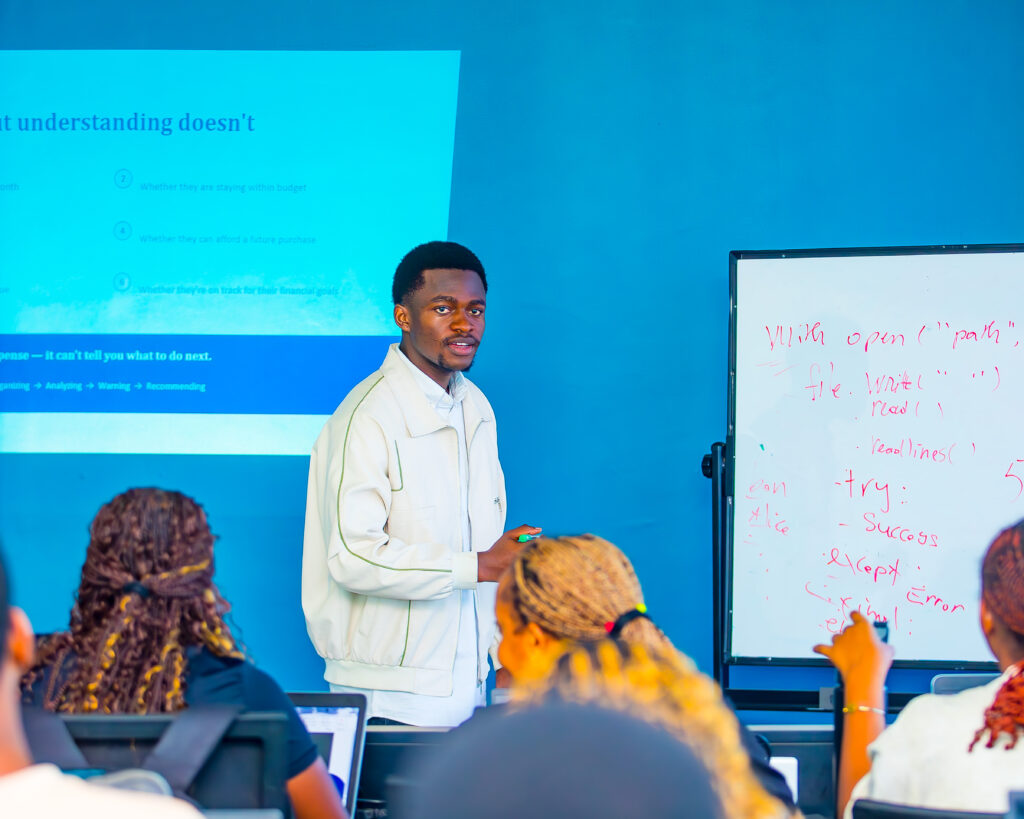
Nzanzu Muhumbania Antoine graduated with a Bachelor’s degree in Software Engineering from the African University of Rwanda (AUCA)

Antoine’s journey did not stop with learning and teaching. He also used his skills to build solutions