Across Rwanda, agriculture remains a major source of work. But for many young people, farming still means small plots, uncertain income, and seasonal work. A new youth program bets that the answer isn’t to pull young people away from agriculture, but to change what agriculture can offer them.
For years, the conversation around young people and agriculture in Rwanda has always been central, as agriculture is everywhere; it feeds the country, employs millions and remains critical to Rwanda’s economic plans. Yet for many young people, farming is not necessarily the first career they would choose. The problem is not simply whether young people are willing to farm. It is whether farming can provide the kind of income, independence, and prospects they expect from a career. That question is becoming increasingly important.
Rwanda’s 2024 Agricultural Household Survey estimates that 2.2 million households — 65.3% of all households — were agricultural households. Yet young people aged 16–30 represented only 30.7% of the adults engaged in agricultural activities. At the same time, the nature of agricultural work is changing. In 2024, 51.4% of young agricultural workers were in market-oriented agriculture, compared with 48.6% in subsistence agriculture. The shift is still incomplete. But it points towards a possibility: agriculture may be becoming less about simply producing enough to eat and more about producing something that can be sold. That is where one five-year experiment in Rwanda is worth watching.
A bet on young farmers
In early 2025, the Youth Entrepreneurship in Agriculture Rwanda program — known as YEA-R — is working with young people in Rwanda, focusing particularly on two value chains: horticulture and poultry. The program is supported by the Mastercard Foundation and led by SNV through a consortium of partners. Its stated ambition is substantial: to create 40,000 dignified and fulfilling work opportunities for young people in Rwanda’s agri-food sector by 2029. The program is deliberately aimed at groups that have often faced greater barriers to economic opportunities. Its target is predominantly young women, alongside young people with disabilities. But numbers alone tell us very little about whether such a program is working. So, when we grew interested in the YEA-R program, we looked beyond the headline figures. The more interesting question was: What are young people actually doing with the opportunities they are being given?
The first change: young people are learning to save
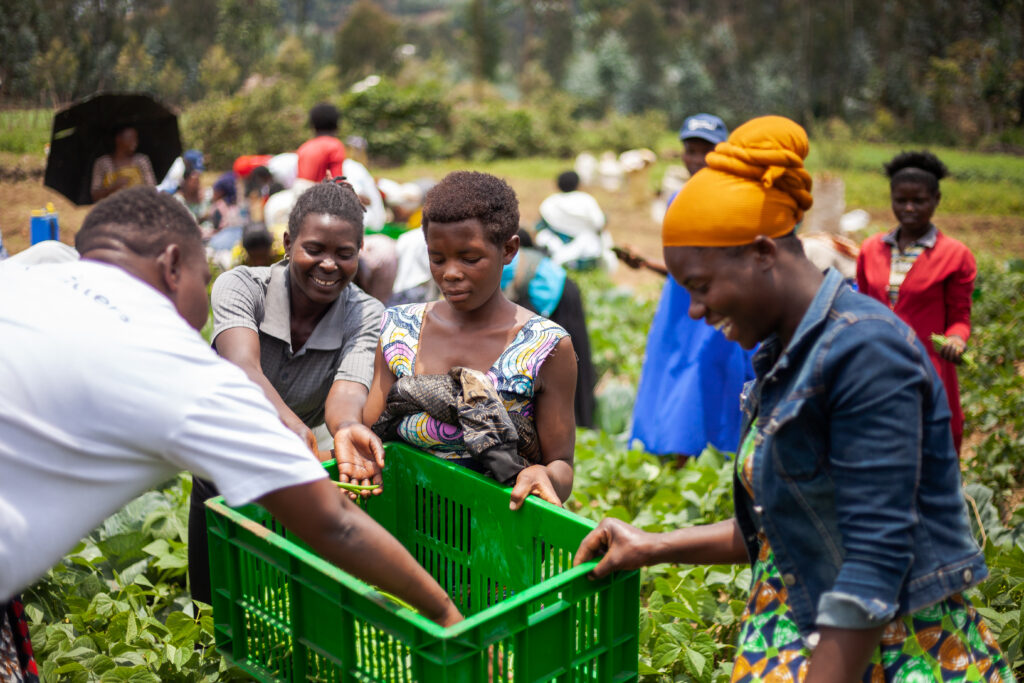
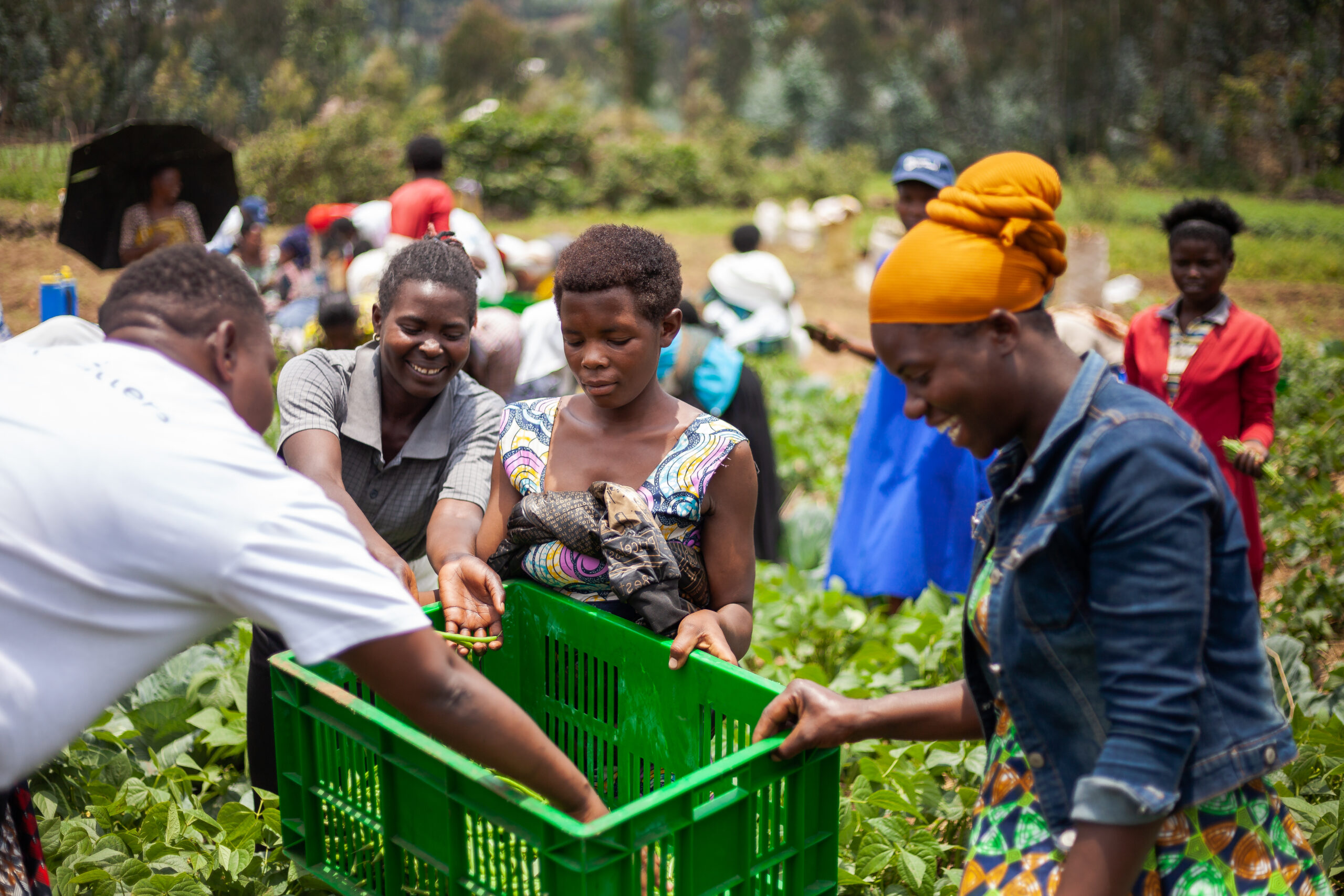
The program started by bringing young people together into farming groups and providing training in life skills, agricultural production, business and financial management. By the end of the first quarter of 2026, 400 new youth groups had been formed, bringing 12,000 young people into the program. About 92.9% were young women, while 7.81% were people with disabilities. But the program’s first important financial test was not how much outside funding the groups received. It was how much they could save themselves.
In Muhanga, 30 young people are trying to build a business
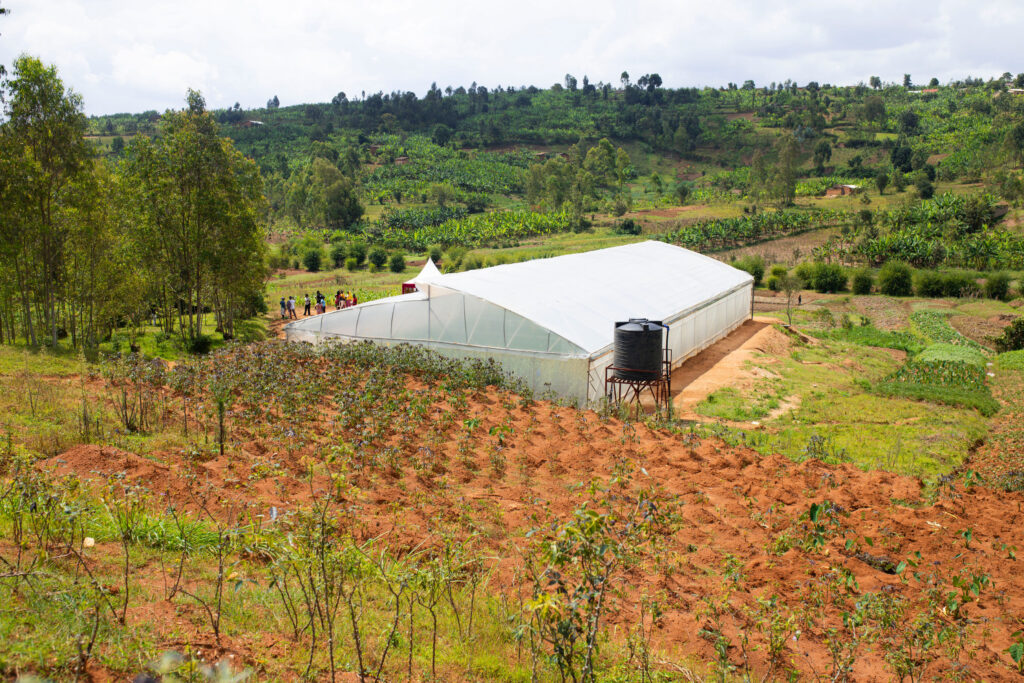
Before joining YEA-R, members of Ejo Heza Bwirika Youth Group farmed individually, mainly for subsistence. They had limited knowledge of improved farming methods and little access to savings or financial services. The group, which is composed of 30 members: 25 young women and five young men, including 3 people with disabilities, with support from the program, the members began working collectively, established a vegetable demonstration plot, and expanded their production from 10 ares to half a hectare. They began growing sweet peppers in response to market demand. Then came something arguably more important. The group accumulated RWF 975,400 in savings, which they added to their sales revenue and began using that money to cover practical business costs such as land rental, irrigation, and greenhouse operations. The group has since taken over a greenhouse and says it wants to expand production to one hectare using its own savings.
From chickens to cash
Poultry is providing another test. In the second quarter, 39 poultry pens supported through the program were stocked with a total of 11,700 laying chickens. The groups reported RWF 38 million in sales during the quarter, split between poultry and horticulture. The poultry birds began producing eggs quickly enough to generate RWF 24.75 million in sales in June alone, according to the detailed program report. But again, the most revealing evidence is not the amount of money generated; it is who is making the decisions. In Rutsiro, a youth poultry group began buying its own feed from January this year. The members also used their savings to install electricity in their poultry house after recognizing that lighting could improve egg production. When the group later hosted members of the Senate, the young farmers explained how they had progressed, what they wanted to achieve next — and what was still holding them back. They specifically raised the high cost of poultry feed. This is a small but telling moment..
Teaching young people to farm better is only half the job
A farmer can grow excellent vegetables and still struggle to make money if there is no reliable buyer.
A poultry farmer can increase egg production and still see profits squeezed if feed prices rise. A young entrepreneur can have the right idea and still struggle if they cannot access affordable finance. That is why the program is also trying to connect young farmers with buyers and financial institutions. In Muhanga, for example, seven youth groups entered into agreements with Green Land Horticulture Ltd after organizing their production around market requirements. The challenge now is whether such connections can move from a handful of promising examples to something that works on a scale.
And what about young women and youth with disabilities?
For young women, participation is only the starting point. Of the 12,000 young people brought into the program in early 2026, 92.9% were young women. That focus is deliberate. Women already do much of the work in Rwanda’s agricultural economy, but participation in farming does not necessarily mean control over income, assets or decisions. YEA-R is therefore working beyond technical farming skills, supporting young people to build confidence, leadership and a greater voice in decisions affecting their groups and businesses. By the second quarter, 1,478 young people had been reached through a training-of-trainers approach, with trained participants cascading learning on confidence, leadership and decision-making to other members of their groups.
For young people with disabilities, inclusion requires more than putting them on a participant list. The program first conducts disability needs assessments to understand the type of disability and determine what support each participant may require to take part meaningfully. Support can then include assistive devices such as wheelchairs and white canes, access to medication, and referrals or facilitation to access health facilities where needed. The program also seeks to avoid isolating young people with disabilities by incorporating them into larger youth groups, rather than creating separate groups solely for people with disabilities. This is intended to strengthen participation, peer relationships and a sense of belonging within the wider agricultural community. In the first quarter, 937 young people with disabilities were reached, while by the second quarter the program reported that 807 had received training on disability equity, inclusion and accessibility.
The greenhouse experiment shows why agriculture is not simple
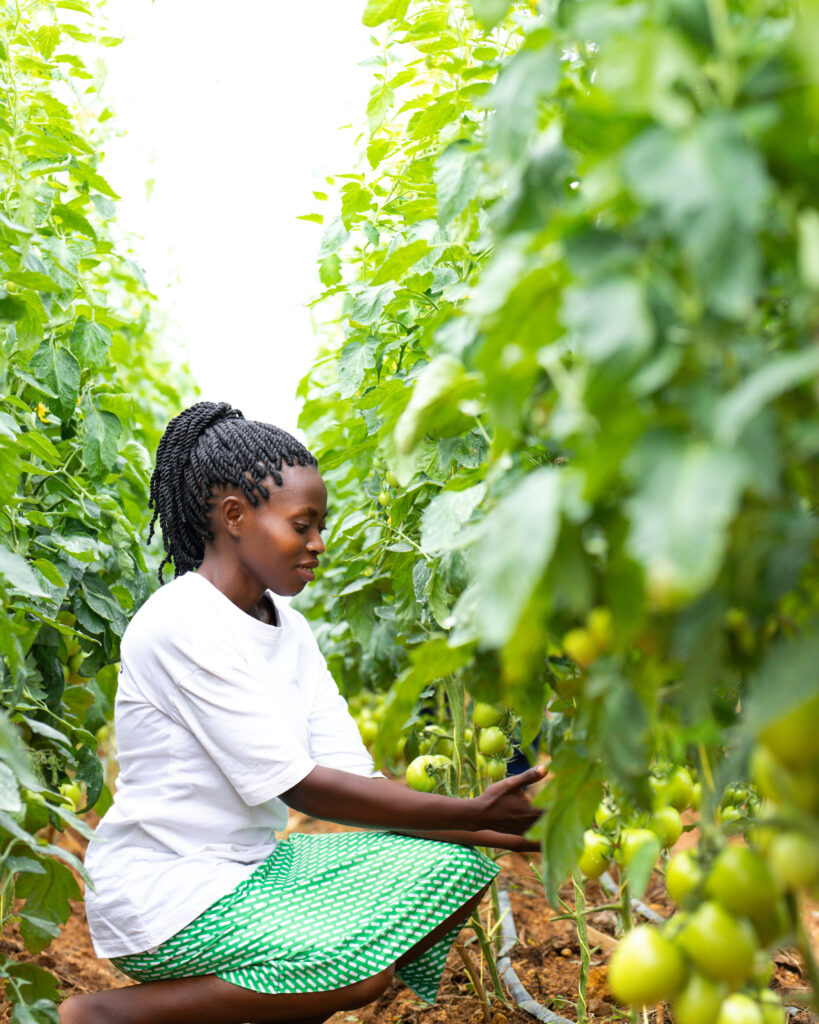
The program has also invested in two greenhouses, in Muhanga and Burera. On paper, a greenhouse sounds like a straightforward productivity solution: controlling the growing environment, producing higher-value crops and creating better economic opportunities. Reality has been less tidy. In Burera, production was progressing well. In Muhanga, the first tomato crop faced water shortages and pest and disease problems. The program decided to harvest the crops and then switch to sweet peppers grown in substrate bags to reduce soil-related disease and improve water management. That experience is important because it challenges the idea that technology automatically solves agricultural problems; it doesn’t. A greenhouse still needs reliable water; it still needs skilled management; it still needs a market, and it still needs farmers capable of responding when something goes wrong. The young farmers’ ability to adapt may ultimately matter more than the structure itself.
So can agriculture be a viable career for young people
Rwanda cannot afford to treat agriculture simply as an occupation that young people inherit because they have no alternative. The sector remains economically important.
The question, therefore, is not whether Rwanda needs young people in agriculture. It is what kind of agriculture young people are being asked to enter.
To attract them, the sector must move beyond small plots, low productivity and uncertain prices, offering viable businesses, reliable markets, technology, food processing and services across the food system.
That is the bet behind YEA-R.