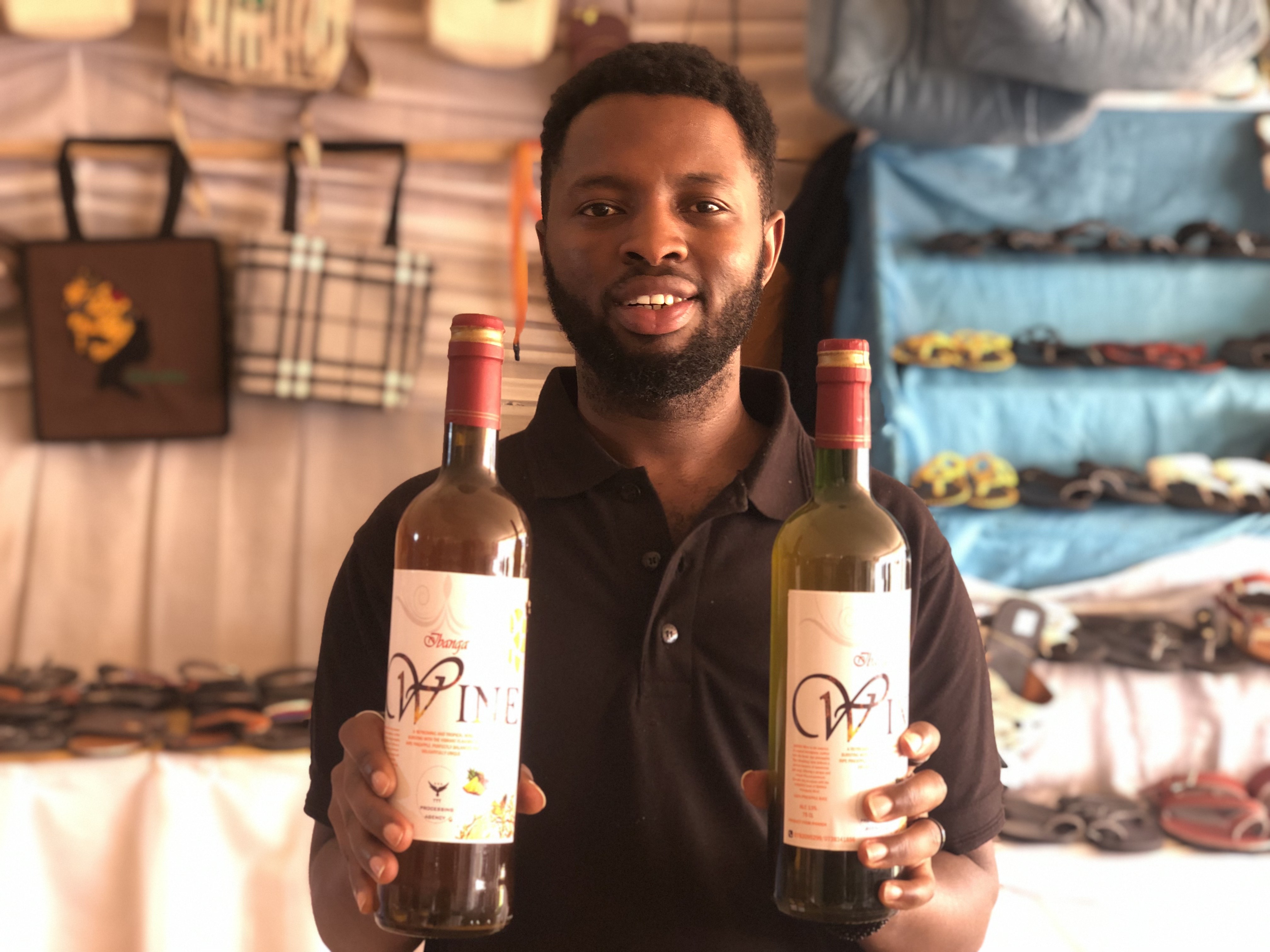
Saleh Ahishakiye, a 25-year-old university student specializing in food science, has started producing wine from pineapples to help farmers reduce post-harvest losses that previously left them with significant waste during peak seasons.
Originally from Rwamagana District, Ahishakiye has established a small winery in Musanze District, where he also studies, and works with pineapple farmers in the districts of Gakenke and Rulindo.
Speaking to KURA, he explained that his project was inspired by the need to add value to pineapples and provide farmers with a reliable market.
“ I chose to make pineapple wine because I checked various reports and found that about 25% of pineapple harvests go to waste. I wanted to find a way to help farmers add value to their pineapples. At first, I thought about making juice or wine,” he said.
Ahishakiye also noted that Rwanda imports large quantities of wine, which motivated him to create a local alternative while boosting the value of pineapples.
“We began production in 2023 and spent a year testing whether the wine would be good for the market. In 2024, we launched it, and people welcomed it,” he explained.
Farmers supplying him with pineapples benefit from fair prices, which, according to him, encourages them to provide high-quality produce. He explained that it takes juice from two or three good pineapples, combined with yeast, water, and other ingredients, to make one bottle of wine.
Currently, Ahishakiye has submitted his product for Zamukana certification, which would allow him to obtain the necessary standards to sell both domestically and internationally.
“Recently, we were advised to purchase some equipment that would help us produce professionally. Once it is acquired, I believe we’ll be granted certification and will be able to produce more wine and reach international markets,” he said.
However, he pointed out that limited access to modern equipment remains the main challenge.
“The equipment is very expensive, and that’s why we produce less than we should. For now, we manage between 70 and 100 bottles per month, depending on market demand,” Ahishakiye added.
Another barrier, he explained, is the lack of certification, which prevents access to bigger markets.
“Some buyers can’t work with us because we don’t yet have all the required quality certificates. There are markets we miss out on, but we are confident this will be resolved,” he said.
Despite these challenges, Ahishakiye is encouraged by the impact on farmers. Pineapple growers in Gakenke and Rulindo now have a stable market, significantly reducing the number of wasted pineapples.