
Clementine left school when she was in Primary Six. She did not have the luxury of waiting to figure things out. She found vocational training in electrical installation, then found work wherever she could, saving carefully over years with one intention: to build something that was hers.
That patience produced ISARO Services Ltd, based in Kirehe District in Eastern Province. She started with soap and oil production, products she believed in and understood. In 2019, she showcased her work at the Youth Connect event. In 2021, she won the Youth Connect competition and took home a prize of RWF 1,000,000. It felt like confirmation that she was on the right path.
Then COVID-19 arrived. The market for soap and oil collapsed almost overnight. Everything she had built her business around stopped selling.
A different person might have closed the books. Clementine did not. She looked at what she had, at what the land around her could produce, and she changed direction. She moved into chili farming. Then, recognising that selling raw chili would limit what she could earn, she went further and invested in chili processing and value addition. In 2022, support from the Ministry of Youth helped her acquire a solar energy system worth RWF 1.5 million. In a community without reliable electricity, that system was what made processing possible at all. It did not simply help her business. It was the condition on which the business depended.
When Clementine joined the VIBE project jointly implemented by TradeMark Africa (TMA) and International Trade Centre (ITC) in partnership with Mastercard Foundation, she was not starting from zero. She was someone who had already built, lost, and rebuilt. The programme’s business development training gave her stronger tools for financial management, sharpened her entrepreneurial confidence, and opened her to commercialisation opportunities in agribusiness she had not been able to access before.
The effect has been significant. Today, she processes approximately 500 kilograms of chili per month and supplies dried chili products to Fisher Global. Her processing activities generate earnings of between RWF 200,000 and RWF 1,000,000 per month. In seasons when she harvests, chili farming contributes up to RWF 12 million.
She has moved from earning casual wages to running a multi-revenue agribusiness that supplies an international buyer. She creates employment for others in her community. And she is doing it from a district that most people would not think of as a centre of agribusiness activity.
Clementine’s journey asks something important of the people who design support programmes: what do you offer someone who has already demonstrated they can survive? Her answer, and the VIBE Programme’s, is that even the most resilient entrepreneur needs stronger footing to scale. She had the grit. The programme gave her the ground to stand on.
Story development contributed by TradeMark Africa
Photo Credit: TradeMark Africa
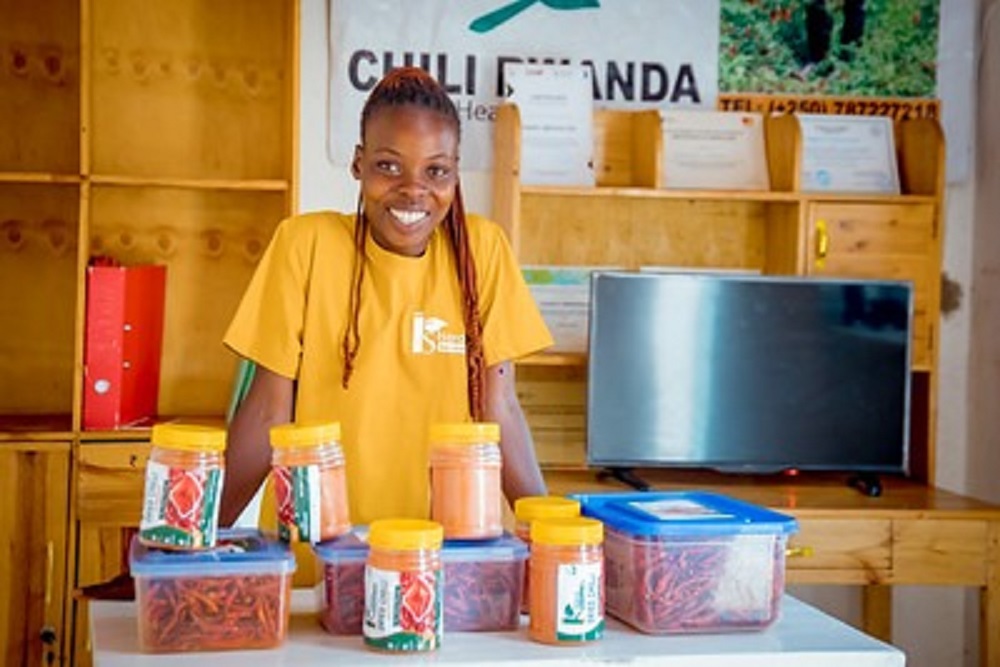
Clementine left school when she was in Primary Six
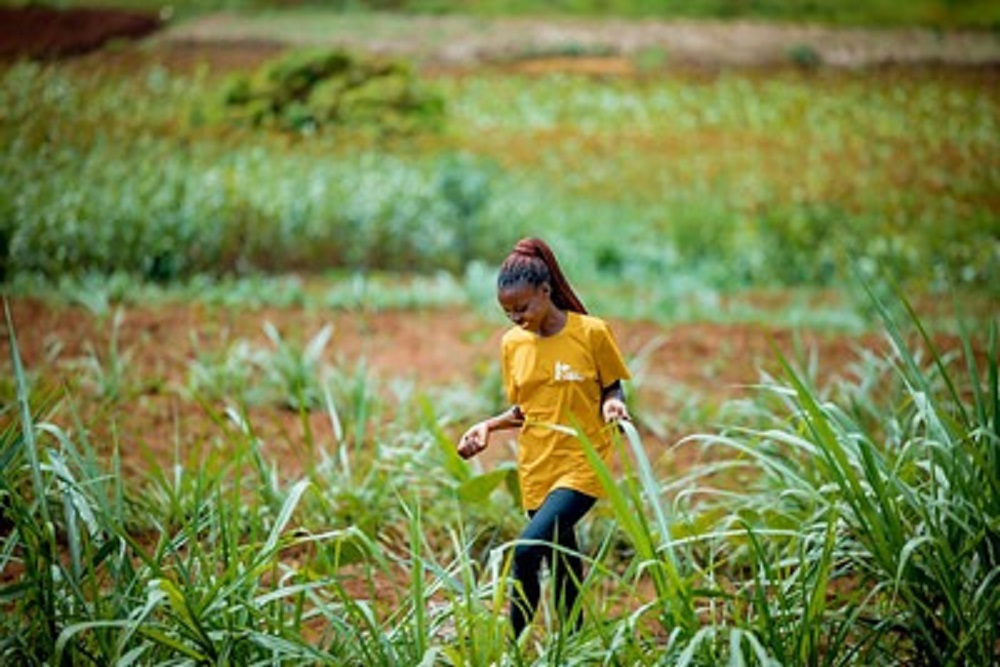
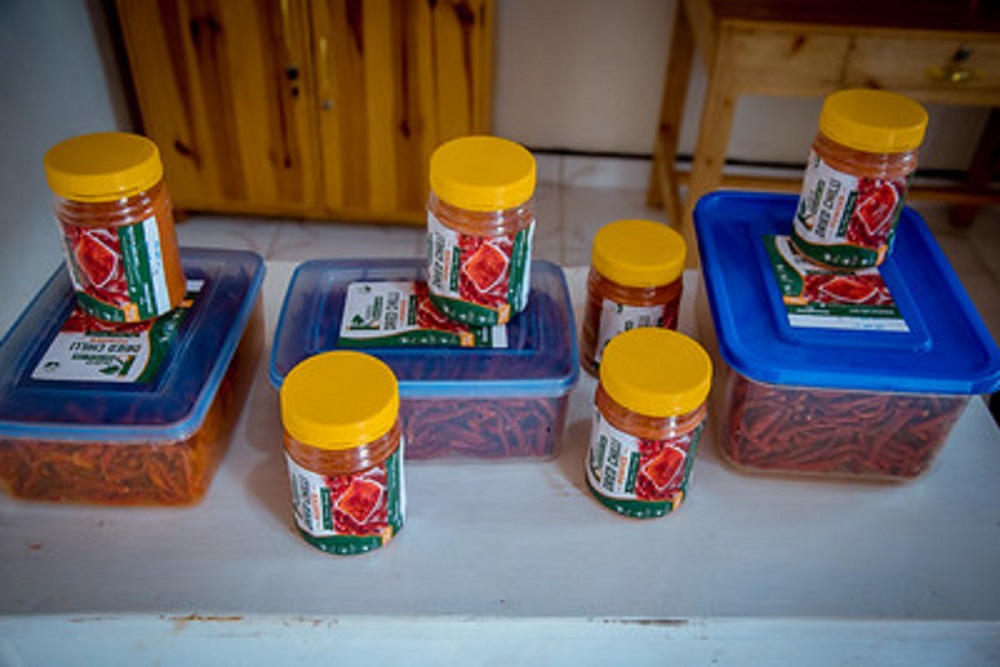
Today, Clementine processes approximately 500 kilograms of chili per month and supplies dried chili products to Fisher Global
