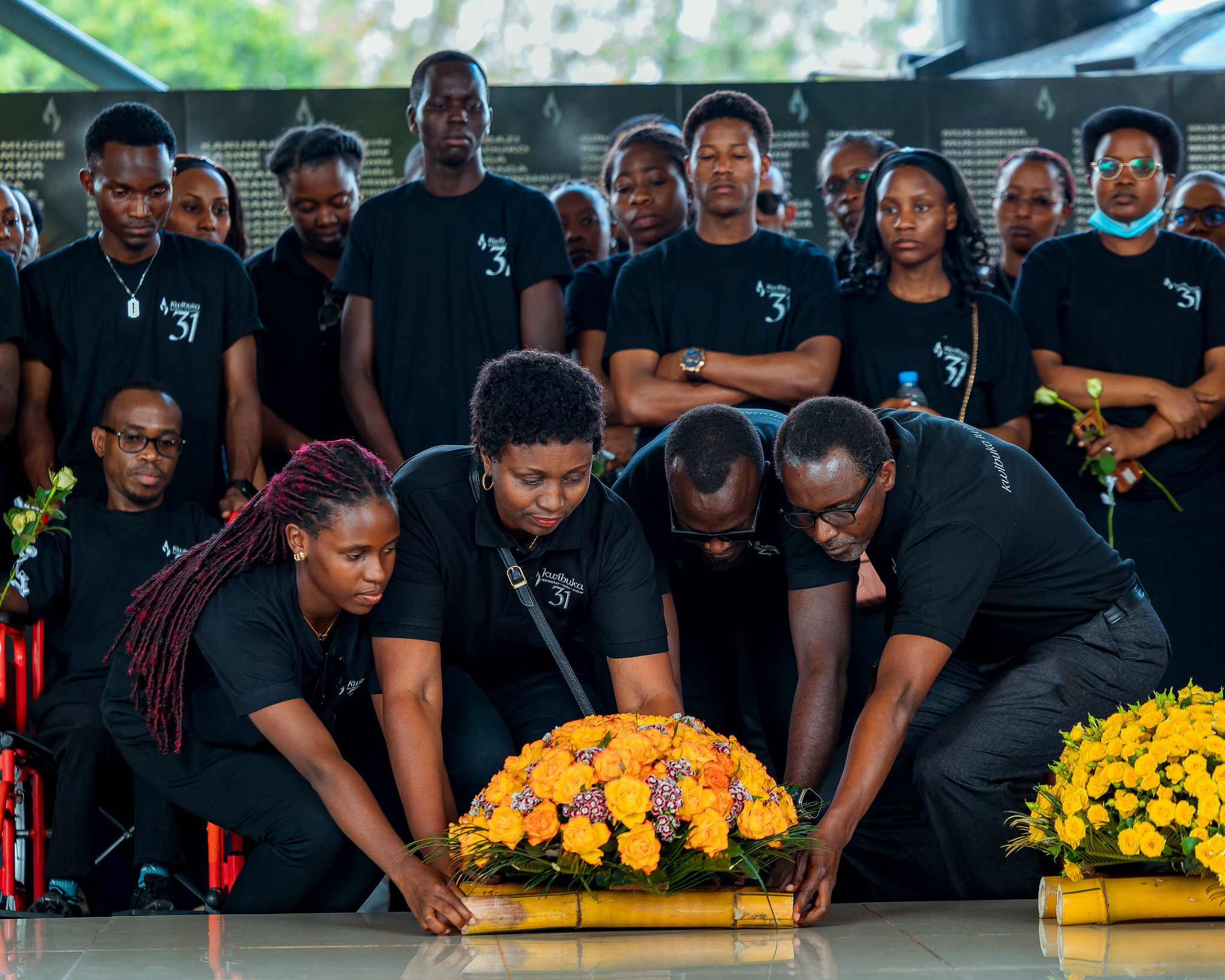
Each year during Rwanda’s commemoration period, Kwibuka, young people across the country take part in acts of remembrance, reflection, and community engagement.
For Hallelujah Akundwe, a second year Electrical Power Engineer student, that journey was deeply personal. “I am Rwandan”, she says. “ Though I wasn’t alive at that time, my parents were, and the 1994 Genocide perpetrated against the Tutsi is weaved into my past. Kwibuka serves as a reminder to expand my understanding of the importance of unity, trust and the responsibility I hold as a Rwandan in shaping my society.”
Hallelujah’s path into accessing University was itself a moment of reflection. Growing up determined to pursue STEM, she applied to the University of Rwanda and was selected into Electrical Power Engineering. But accessing higher education was not guaranteed. The Mastercard Foundation scholarship, she says, changed more than her financial circumstances. “ It became a time for me to reflect on my personal background and what kind of individual I really wanted to be beyond finishing school and getting a job. What am I going to give back to the community after participating in this program?”
While access to higher education and leadership development opportunities continues to expand, structured spaces that connect learning to civic engagement and shared national moments are still not always accessible to all young people. Within this context, initiatives that intentionally link education to participation play an important role.
Through this approach, Kwibuka allows for both a moment of reflection and a way in which scholars actively access and engage with experiences that shape how they understand responsibility, leadership, and their role in society.
In March 2026, ahead of the main commemoration activities, scholars participated in Umuganda, Rwanda’s national day of community service. Working alongside community members, they contributed to collective efforts aimed at supporting local needs during the Kwibuka period.
The Scholars Program brings together students from Rwanda and across the African continent, creating a shared learning environment shaped by Rwanda’s history and its approaches to community engagement.
For some scholars, Kwibuka provides a first opportunity to engage deeply with the history of the 1994 Genocide against the Tutsi, as well as with practices such as Umuganda and the program’s “Give Back” activities. Hallelujah sees her role in that process clearly. “I, as a Rwandan, have grown up hearing about the 1994 Genocide against the Tutsi. But international students who are new to Rwanda, if they are not informed, they will not have knowledge of what happened here, or what their role is in this period.” To bridge that gap, the program facilitates sessions with officials and Genocide history educators before scholars visit memorial sites.
These experiences introduce new ways of understanding collective responsibility, with some scholars expressing an intention to carry these lessons into their own communities after graduation.
For many young people, opportunities to engage in this way — contributing to community efforts while reflecting on national history — are not always part of their educational experience. The integration of these elements reflects a more deliberate approach to leadership development.
During previous Kwibuka commemorations, scholars have visited genocide memorial sites across the country, where they learn about the history of the 1994 Genocide against the Tutsi and reflect on its lasting impact. For Hallelujah, these visits go beyond learning, they deepen her sense of accountability. “It strengthens my commitment to promoting respect for my peers, for every person I meet along the way. We have to hold ourselves accountable to practicing humanity.” These moments provide a deeper understanding of the social and historical context in which they are studying and living.
Through the program’s “Give Back” pillar, scholars are also supported to translate reflection into action. They have organised initiatives to support genocide survivors and vulnerable communities, including donating livestock and essential household items. “Scholars come together, collect funds, and plan the activity,” Hallelujah explains. “It is collaborative”. These efforts form part of a broader pathway that encourages young people to move from learning to contribution.
Beyond the Kwibuka period, scholars continue to engage in community-based initiatives throughout the year. These include renovating homes for vulnerable families, supporting access to health insurance, and delivering training in areas such as financial literacy and conflict resolution. These activities demonstrate how access to education can be connected to practical opportunities to contribute to community wellbeing. In this way, the Scholars Program contributes to Rwanda’s wider human capital agenda by connecting access to education with civic responsibility, leadership formation, and community contribution.
As Kwibuka 32 unfolds, scholars are preparing for further engagement in the coming weeks, including memorial visits and continued community support. Hallelujah’s campus is planning a commemoration, with visits to Genocide survivors being planned in partnership with local leaders. For many, this period is part of a wider pathway — one that connects education with lived experience, reflection with action, and opportunity with responsibility.
Within this context, the Mastercard Foundation Scholars Program at the University of Rwanda provides more than access to higher education. It creates pathways for young people to engage with their communities, develop leadership skills, and contribute to shaping more inclusive and resilient societies.
For many young people, Kwibuka is not only about remembering the past, but about shaping the kind of leaders they choose to become. “ As you shape yourself as an individual, the question that should remain is; what then are you going to give back to the community?”
The Mastercard Foundation Scholars Program at the University of Rwanda is a 10-year partnership launched in 2021 to expand access to higher education for young people from Rwanda and across Africa. Today, it supports 866 Scholars from 11 countries across the continent and recently graduated its first cohort of 38 scholars in October 2025.
The program is designed to support young people through more than academic access. Eighty percent of Scholars pursue STEM fields, while leadership development is built through initiatives such as the HATANA Innovation Bootcamp and annual Summer Camps, which recently brought together around 600 students to cultivate skills in ethics, civic responsibility, and community engagement.
The program also supports pathways into entrepreneurship through the Scholars Entrepreneurship Fund (SEF), which has awarded $5,000 grants to 52 student-led start-ups working to scale social-impact innovations. Over 10 years, the program aims to support 1,200 Scholars, along with an additional 200 Scholars contributing to Rwanda’s 4×4 initiative to increase the number of health professionals over the next four years.
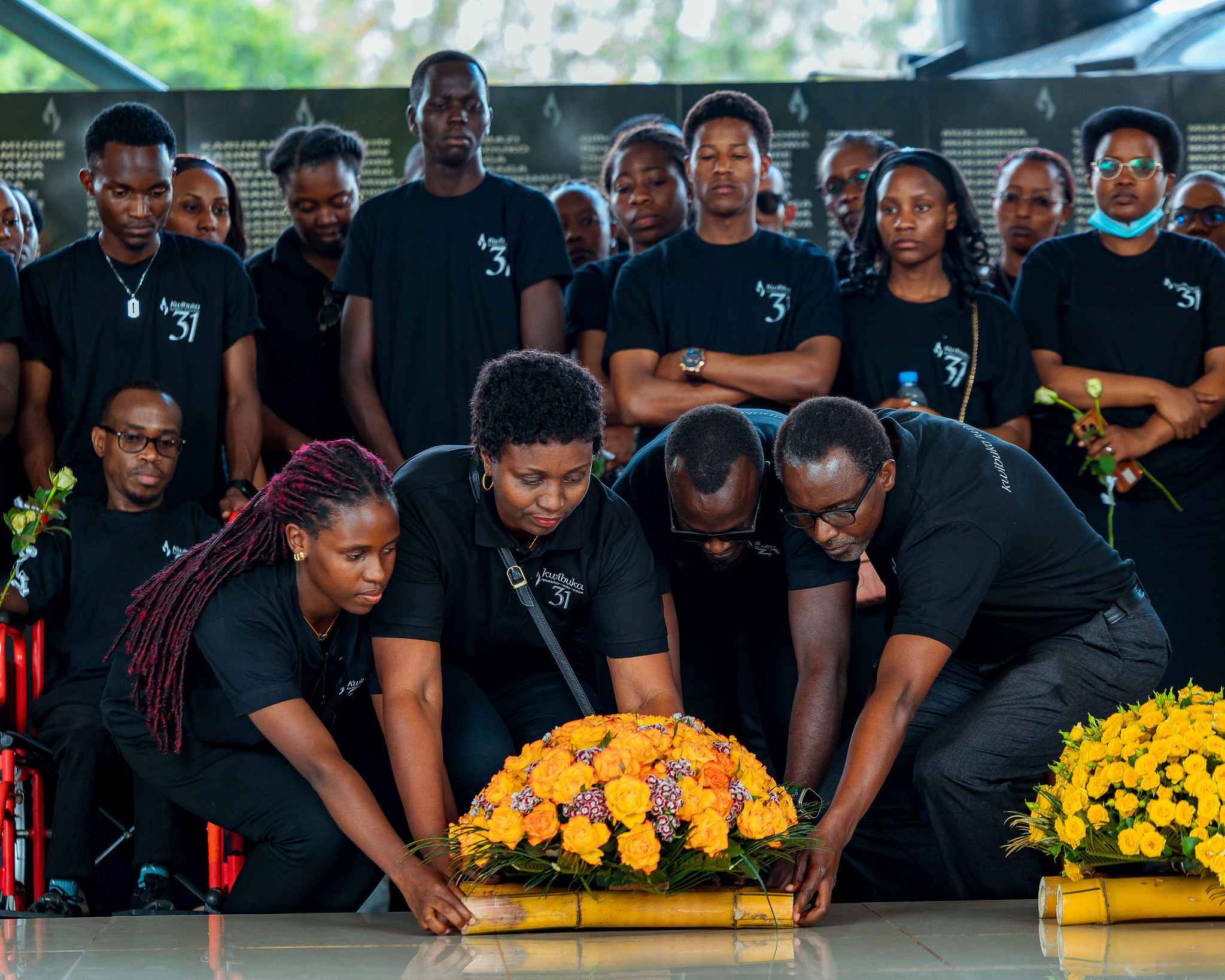
Hallelujah Akundwe, second from right, with her colleagues and the Vice Chancellor of the University of Rwanda, Prof. Didas Muganga
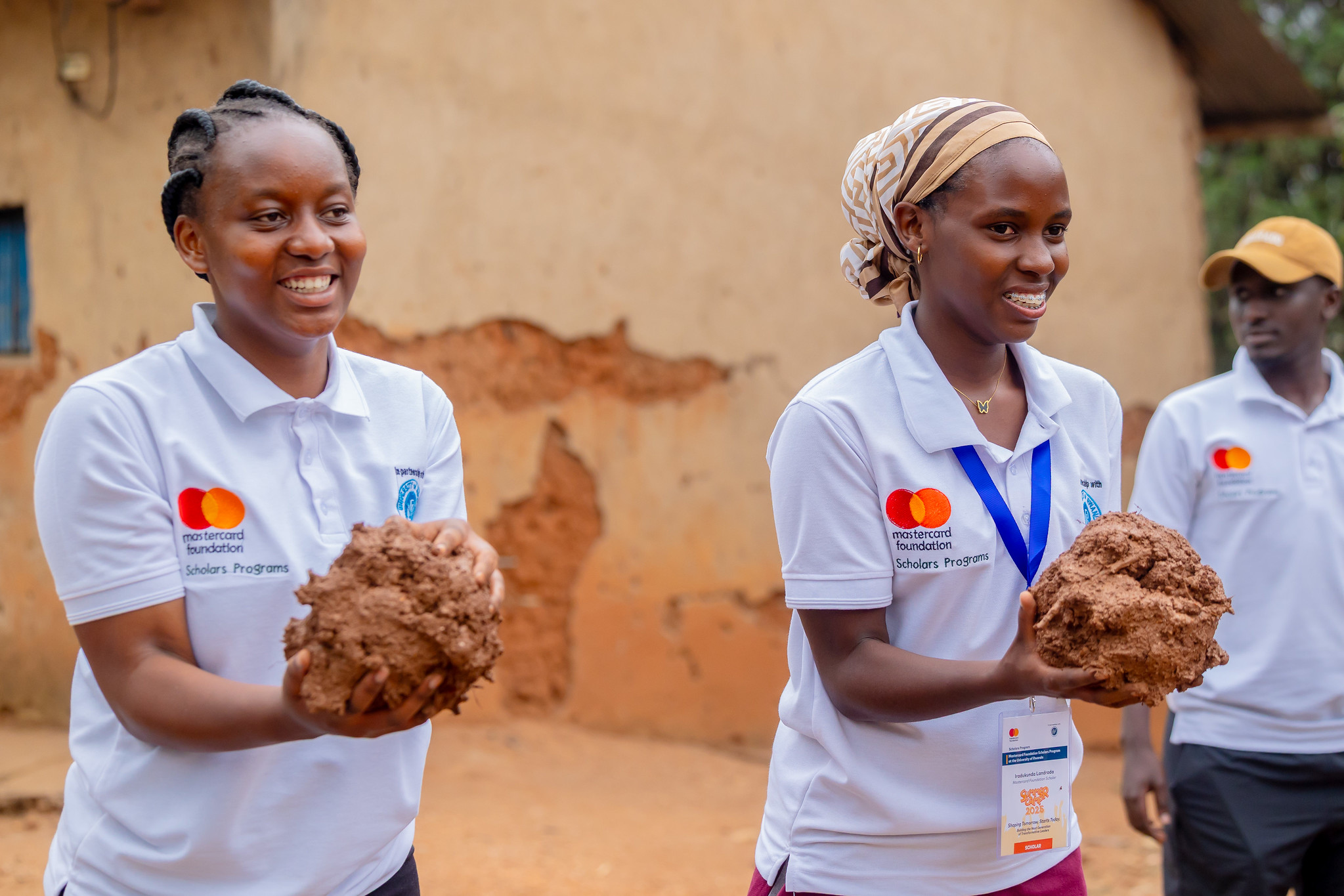
Scholars work together to carry mud, contributing to the construction of homes for genocide survivors during their Kwibuka community service activities
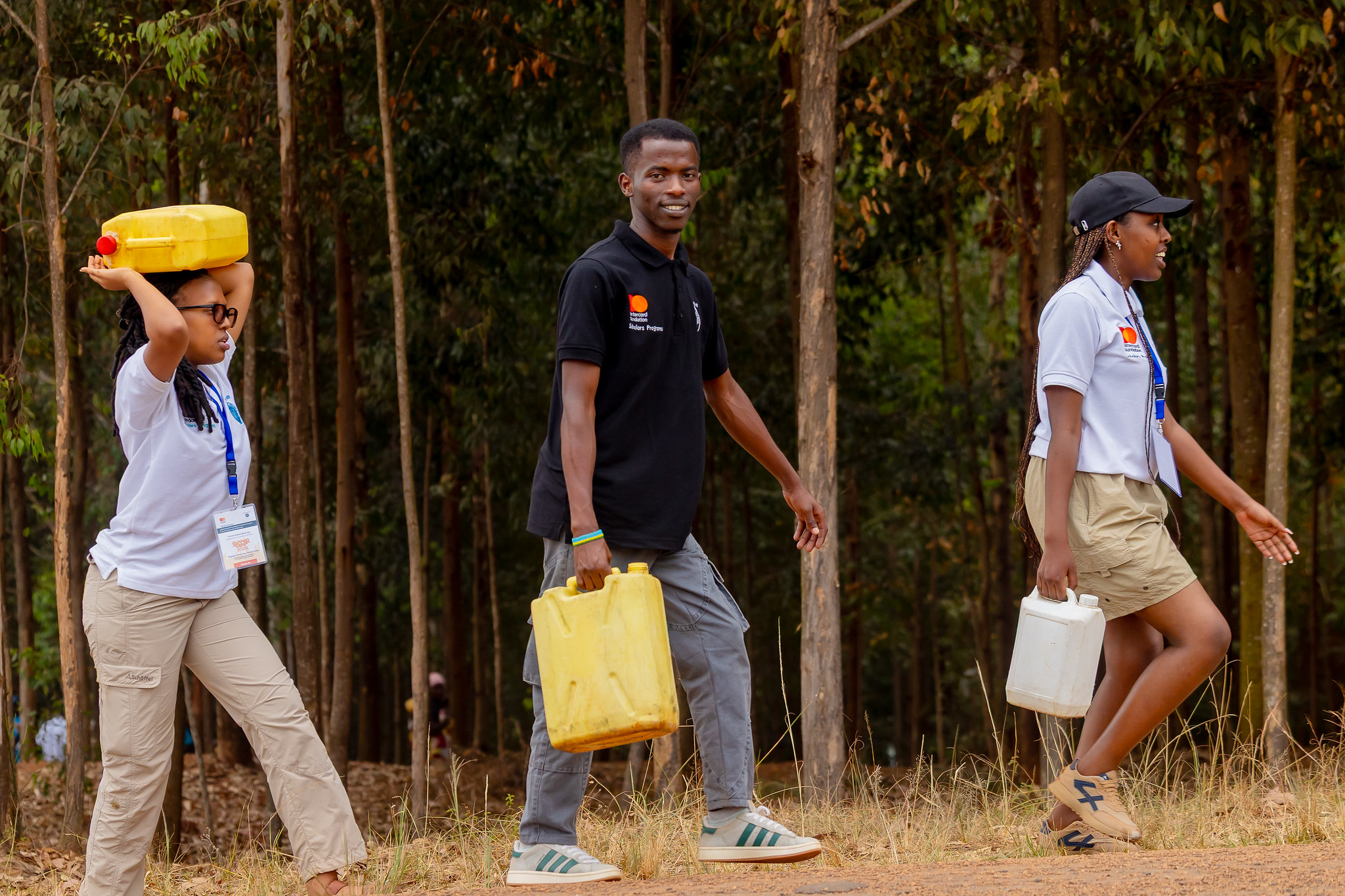
Mastercard Foundation Scholars participate in Umuganda, carrying water in jerricans as part of their efforts to build houses for survivors of the 1994 Genocide Against the Tutsi
Editorial: Above are archival pictures of the scholars during their give-back activities from last year
